Losing the Night: The Effect of Artificial Light on the Environment

The lights of downtown Vancouver at night. Photo by Lisa Siddons.
Data gathered by backyard astronomers shows that the night sky becomes about 10% brighter each year due to human activities.
Life on Earth evolved to be dependent on the rhythms of day and night.. Scientists have long known that artificial light produced by sources like cities, yard and house lights, industrial facilities, large public events, street and road lamps, and increased vehicular traffic can have an effect on the environment. SḴŦAḴ | Mayne Island isn’t a big city, but artificial light still affects our wildlife and human populations.
Light pollution disrupts the biological clocks of many animals that are active at night. The physiology of these animals is finely tuned to the patterns of light and darkness, and if disturbed, it can alter patterns of sleep, hunting, mating, and other activities by affecting the animal’s hormone production. Many plant species rely on the period of night to tell them the appropriate time to start reproductive cycles.
Let’s examine some of the issues that artificial lighting can cause animals, with particular focus here on Mayne.
Birds
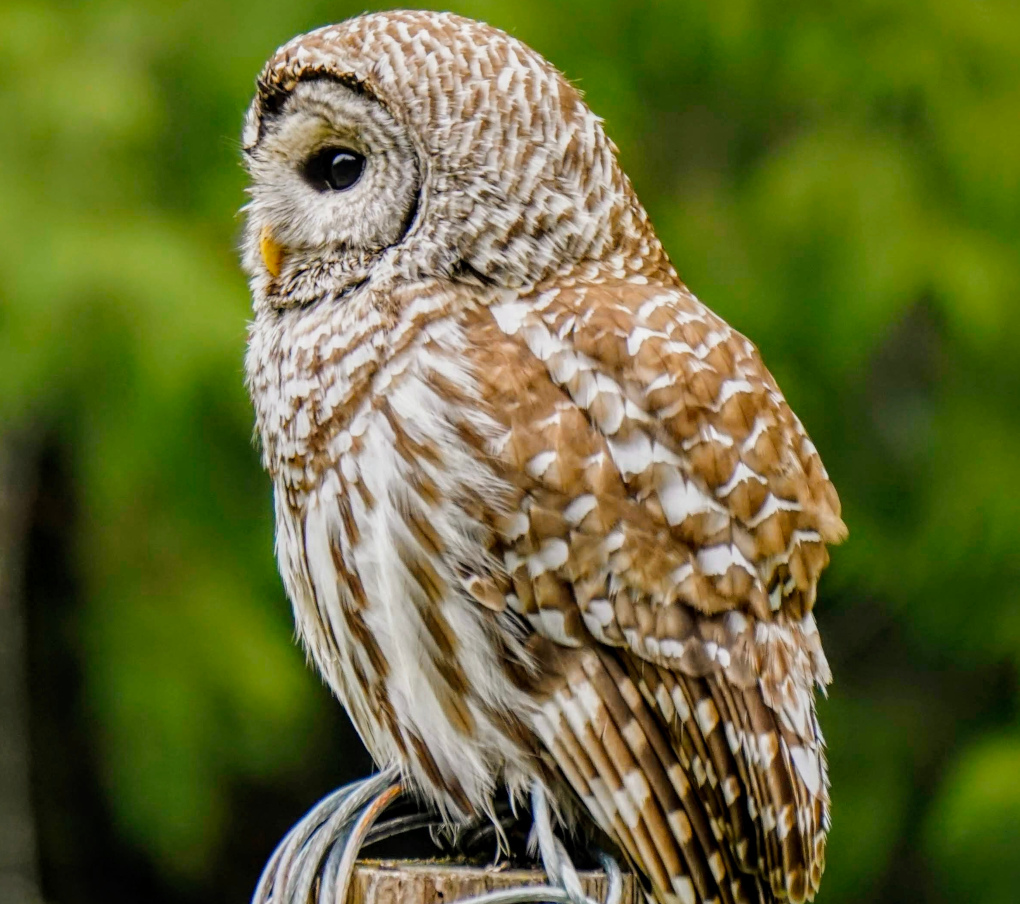
Owls, which hunt at night, need darkness to track prey without being seen. Artificial light interferes with their ability to perceive movement and judge distance. Less productive night hunting compels them to hunt during daylight hours, causing them to expend more energy or to be forced to compete with other predatory animals.
Bright house and yard lights can also attract or confuse birds. Known as “fatal light attraction,” it can cause birds to crash against windows when they navigate at night. When migrating, some species, such as sparrows – which are very active at night throughout the year – rely on stars or moonlight. Artificial light can cause them to wander off course or circle around structures for long periods of time, exhausting them and burning energy they need to fuel their seasonal migrations.
Bats

Many of our local bat species avoid hunting in or flying through artificially lit areas because it exposes them to other night hunters such as owls. Artificial light shining near places where bats roost also causes them to delay their hunt, missing peak times of insect availability. Some even die of starvation waiting for the approach of night, which, for them, doesn’t happen.
Insects
Artificial light causes many nocturnal insects to swarm around streetlights and buildings instead of areas they would naturally inhabit. Swarming contributes to their decline due to predation and interference in mating. The loss of these integral species also affects creatures that depend on insects for survival.
Amphibians
Glare from artificial lights can interfere with mating habits of frogs and toads that inhabit wetlands. Their mating calls, triggered by natural seasonal changes in light, are an important stimulant to their breeding. Artificial lights interrupt their natural mating behavior, which leads to reduced population.
Humans
And finally, light pollution also affects humans. It disturbs patterns of sleep, which has a huge influence on health and mind. Older people may be especially vulnerable, and there are studies that suggest that artificial light negatively impacts people with dementia and Alzheimer’s.
Astronomers are also rightfully concerned about how artificial light increasingly interferes with their ability to see and study the universe. Skyglow from cities, the encroachment of industrial development, tens of thousands of artificial satellites, and a proposal to launch giant mirrors into space to reflect sunlight to light up areas otherwise cloaked in darkness at night – these sources of artificial light all diminish our ability to study the night sky.
The loss of a night sky full of stars, planets, and meteors diminishes our own individual lives because it robs us of a source of inspiration for our sense of wonder, mystery, and romance.
A few years ago, a young boy from Los Angeles – one of the most light polluted cities in the world – visited SḴŦAḴ | Mayne Island. His jaw dropped in wonder when his eyes saw our night sky. He had never seen more than a handful of stars at once, and he was astounded at what the night sky really had to offer.

Some Solutions
We can all help our local environment by cutting back on our use of artificial lights. Your neighbours might even thank you.
The BC SPCA has published a number of steps to help reduce light pollution, which we list below.
- Turn off exterior lights at your home when you are not using them or choose motion-activated lights instead.
- Keep your curtains closed at night and dim your lights when possible.
- Only place exterior lights where they are needed most and not in excess.
- Avoid directing lights toward the sky or higher than a horizontal line.
- Turn off lights inside your home when not in use.
- Limit your use of white and blue light as much as possible. Different colours of light have different wavelengths – blue and white light contribute more to light pollution than green, red or warmer-coloured lights.
- If you work or live in a tall office or apartment building, try speaking with management to see if there are ways to reduce the number of hours that lighting is left turned on when not in use or if window coverings can be added.
- Spread the word! Let friends and family know so they can start reducing their light pollution.
Sources
Author’s Note: Nearly all the information in this article was sourced from an organisation called “Dark Sky,” an international group of individuals, scientists, learning institutions, and companies that work together to educate and warn us about light pollution, and to help mitigate its effects by providing practical and affordable solutions. I thank them for their important work, and encourage you to visit their website for more comprehensive information.
BCSPCA website Tips to reduce light pollution.


2 Comments
ROBBIN YAGER · 09/01/2026 at 10:48 am
Thank you Bill.
Bright night lighting, especially high intensity LED lighting around homes is definitely unnecessary, especially on our island where crime is almost unknown. I have been told that my neighbours ultra-bright motion-activated lights can be seen shining across the valley into homes on Woodale. Ground level, motion activated is a good solution for home owners who need yard lighting at night. And year round decorative light strings would be far more effective and less annoying to neighbours, if those lights were not left on all night. I feel very blessed when I can see the dark night sky in all its glory, with just a few distant tiny lights across the channel on Pender Island.
Laura Cullen · 09/04/2026 at 9:15 pm
Has anyone contacted BC Ferries about the incredibly bright white (and yellow) lights they’ve installed on berth one? The intense bright white and yellow lights reflect across Village Bay directly into our living room and bed room windows and are on all night, lighting up the surrounding area. Even the leaves on the trees don’t effectively diffuse the light and through the winter months the glare will be even worse. When I inquired at the ferry booth last week I was told ‘a lot of people’ had complained but there was no indication BC Ferries planned to resolve the light pollution.